Agricultural water pumps used in the field generally choose diesel engines over gasoline engines because diesel engines offer overwhelming advantages in four core areas: torque output, fuel economy, equipment durability, and field safety.
Here is a core comparison of the two engines in field pumping operations:
Core Advantages of Diesel Engines
- High Torque at Low Speeds for Stabler Output: Water pumps need to overcome water resistance during long hours of heavy-duty work. With a high compression ratio, a diesel engine delivers massive torque at low speeds, easily driving pumps with large flow rates and high heads. In contrast, gasoline engines rely on high speeds for power, making them prone to overheating and power fading during prolonged pumping.
- Low Fuel Consumption, Saving Money and Effort: The thermal efficiency of diesel is much higher than that of gasoline. At the same time power output, a diesel engine can save a massive amount of fuel compared to a gasoline engine. In fields without power grids where pumps run non-stop, low fuel consumption means not only saving money but also reducing the trouble for farmers to transport fuel back and forth.
- No Ignition System, Extremely Low Failure Rate: Field environments are harsh, often with strong winds, heavy rain, high humidity, or heavy dust. Diesel engines are compression-ignition engines and do not have spark plugs, distributors, or high-voltage ignition coils. This completely avoids electrical failures or startup failures caused by dampness or rain, making them highly resilient against harsh environments.
- Robust Structure, Extremely Long Lifespan: To withstand the immense pressure of compression ignition, the cylinder block, pistons, and crankshaft of diesel engines are built much heavier and thicker. Although the equipment is heavier, it wears out much slower, making it less likely to break down even after running for tens of thousands of hours exposed to sun and rain in the wild.
- Safer Field Storage: Gasoline is highly volatile and has a low flash point (tens of degrees below zero), making it highly explosive near a spark. Diesel is non-volatile and has a flash point above 55°C. Storing and refueling diesel in sun-drenched fields or temporary sheds carries a much lower fire risk than gasoline.
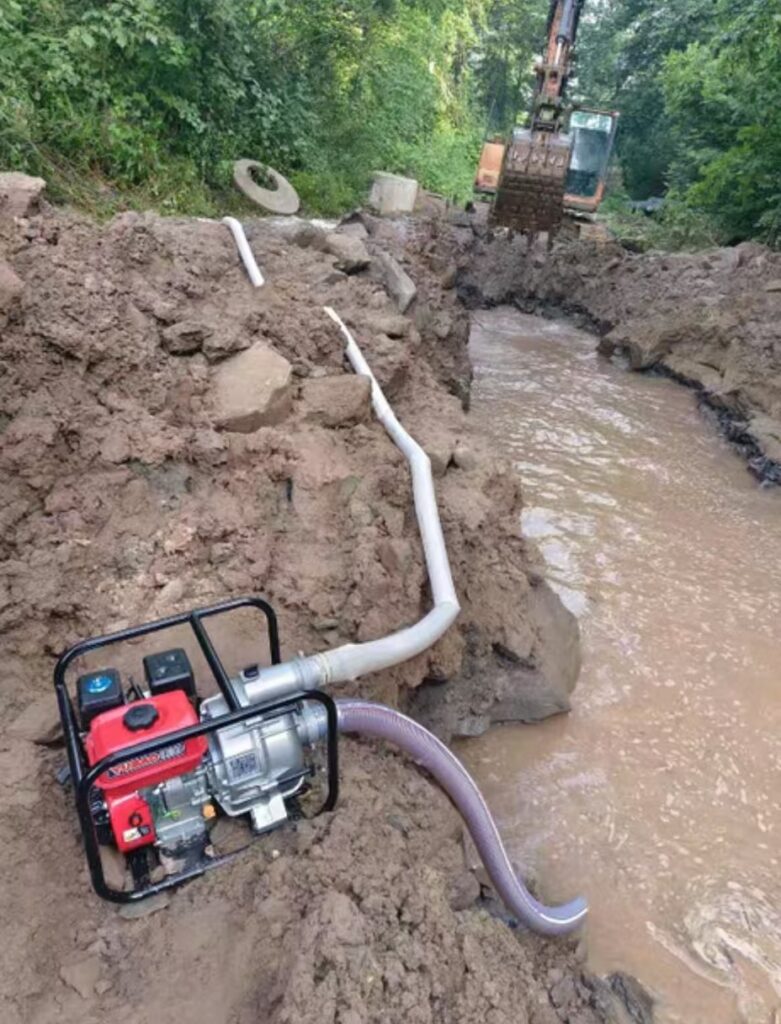
Applicable Scenarios for Gasoline Water Pumps
Gasoline water pumps are not useless; they usually exist as small alternatives:
- Advantages: Light body, cheaper upfront purchase price, and easy startup.
- Scenarios: Ideal for small vegetable gardens, orchard irrigation by individual households, or emergency water supply scenarios requiring frequent manual transport over complex terrains (such as mountains or terraces).
For large-scale farmlands, high-flow irrigation, and long-cycle operations, diesel water pumps remain the undisputed choice.